

Our Story
The meaning of Yugen
A Japanese idea about appreciating the mysterious beauty around us — those quiet moments that create feelings too deep for words. Our tea is inspired by that same sense of pause, connection, and wonder.
Where it began
Born from a single cup
Yugen Teas began not in a boardroom, but in a small kitchen in Taipei, where a cup of high-mountain oolong on a rainy afternoon stopped time. That moment — the steam, the silence, the taste of something ancient — became the question we have been answering ever since.
We spent years travelling through the tea-growing regions of Taiwan, China, and Southeast Asia, learning from farmers who had tended the same hillsides for generations. We drank thousands of teas. We asked thousands of questions. And slowly, a collection began to take shape — not a catalogue, but a curation.
Every tea we carry is one we would drink ourselves. That is the only criterion that has ever mattered.

The people behind the teas
A stubborn Canadian and the woman who changed his mind
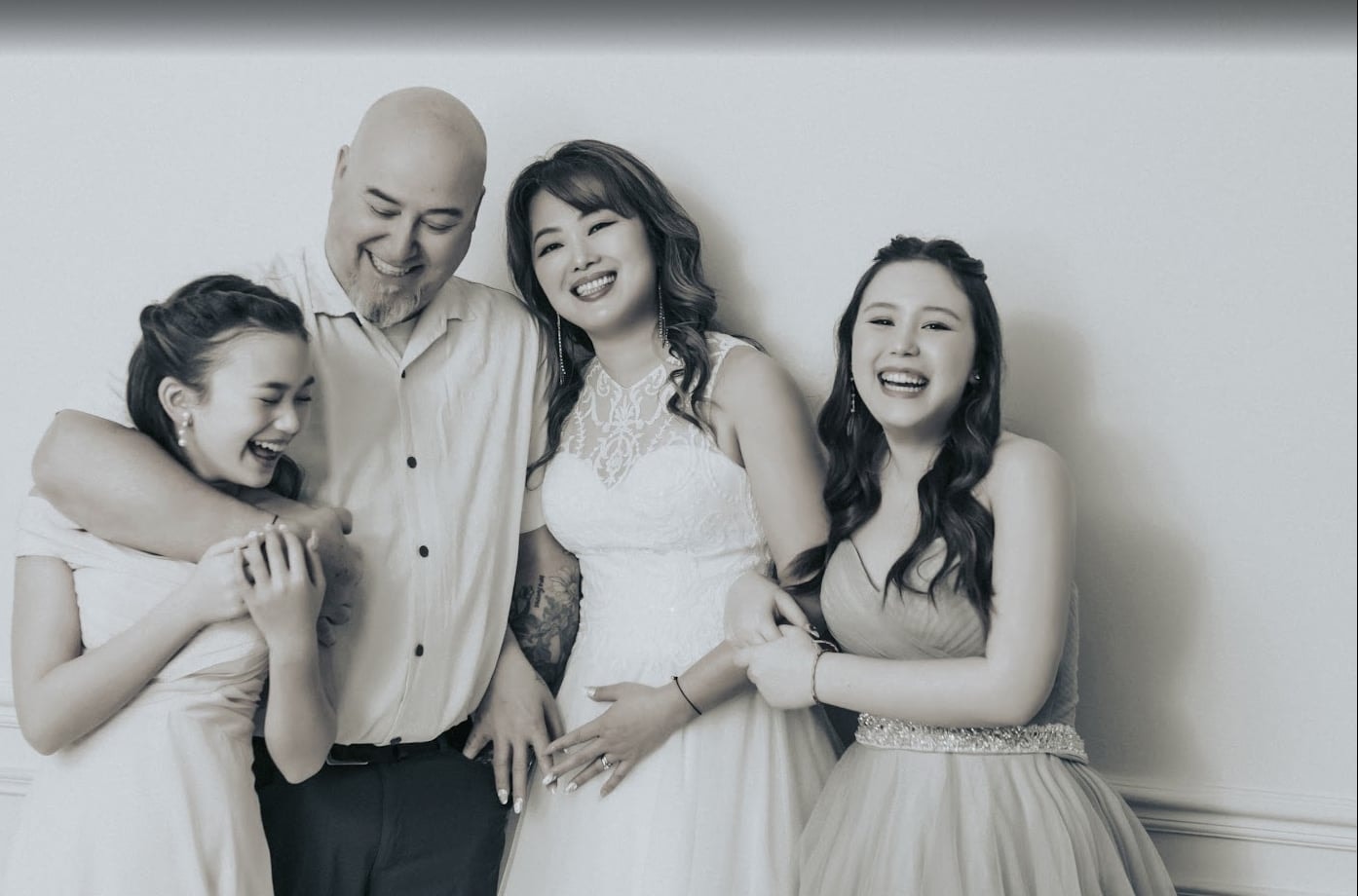
"She had been telling me for years. I just wasn't ready to hear it."
— Co-founder, diagnosed with type 2 diabetes in 2019
When a Canadian man and a Taiwanese woman meet, fall in love, and marry — as ours did in 2006 — they bring two very different relationships with the world into the same kitchen. She grew up in a household where dried herbs were kept in labelled jars, where the first response to illness was a carefully brewed decoction, and where the wisdom of traditional Chinese medicine was simply part of daily life. He grew up in a world where medicine came in blister packs and wellness was something you managed with a doctor's prescription.
For years, he was politely sceptical. She would suggest a tea for his digestion, and he would reach for an antacid. She would recommend a herb for his energy, and he would pour another coffee. He was not dismissive — he respected her deeply — but he had been raised to trust what could be measured, tested, and prescribed. Ancient remedies, however lovingly prepared, felt like folklore to him.
Then came the diagnosis. Type 2 diabetes, in his mid-fifties. His blood sugar was sitting in the high teens — a number that alarmed his doctor and frightened him. The prescriptions followed: one medication, then another, then a third. Each one helped the numbers, but left him feeling flat, fatigued, and somehow less himself. He was being managed, not healed.
It was his wife who sat with him one evening and said, quietly, that she had something she wanted him to try. Not instead of his medication — she was careful about that — but alongside it. A blend she had been preparing for years: bitter melon and mulberry leaf for blood sugar, aged pu-erh and hawthorn berry for digestion, goji and schisandra for energy and vitality. The same herbs her mother had kept in those labelled jars.
He drank it. Every morning, with the same attention she had always given to the preparation. And slowly — over months, not days — things began to shift. His fasting glucose, which had sat stubbornly in the high teens, began to fall. It crossed into the low teens. Then into single digits. Today it stays consistently below 6. His digestion, long troubled, settled. The fatigue lifted. He felt, as he puts it, like himself again — but a version of himself he had not met before.
Yugen Teas is the direct result of that journey. It is his acknowledgement that he was wrong to dismiss what he did not understand, and her quiet vindication of a tradition she had always believed in. We built this company together — a Canadian who learned to listen, and a Taiwanese woman who never stopped knowing. Every tea in our collection carries that story.
These are the founders' personal experiences. Blood sugar outcomes vary between individuals. Yugen Teas does not make medical claims. Please consult your healthcare provider before making changes to your health routine.

"A good tea does not ask you to hurry. It asks you to arrive."
Our philosophy
Slowness as a practice
We live in a world that rewards speed. Yugen Teas exists as a quiet counterargument. We believe that the act of making tea — the measuring, the waiting, the first sip — is itself a form of meditation. A moment of deliberate slowness in a life that rarely slows.
This philosophy shapes everything we do: how we source, how we blend, how we write, how we pack. Nothing is rushed. Nothing is accidental. Every detail is considered, because we believe that care is perceptible — that you can taste the attention that went into a tea.
A personal journey
The man who stopped waiting for a prescription

"I did not find tea. Tea found me — at the moment I was ready to listen."
— David, 55, diagnosed with type 2 diabetes in 2019
David was 55 when his doctor handed him his fourth prescription in three years. Metformin. Then a second medication. Then a third. Each one came with its own list of side effects — fatigue, digestive discomfort, a persistent flatness that made him feel less like himself. His blood sugar numbers improved on paper, but he did not feel well. He felt managed.
He had always been curious about traditional Chinese medicine — his grandmother had kept a small cabinet of dried herbs in her kitchen in Guangzhou, and he remembered the smell of them as a child. So he began to read. He visited a practitioner in Taipei. He started asking questions that his GP did not have time to answer.
What he discovered was not a cure. He is careful to say that. What he found was a practice — a daily ritual of blending and steeping that gave him agency over his own body for the first time in years. Bitter melon and mulberry leaf for blood sugar support. Aged pu-erh and hawthorn berry for digestion. Goji, ginseng, and schisandra for energy and vitality. He brewed each blend with the same attention a craftsman gives to his work.
Over eighteen months, his fasting glucose levels fell steadily. His digestion — long troubled by both his condition and his medications — began to settle. The bloating that had plagued him for years eased. He slept better. He felt, as he put it, like the lights had come back on.
David's story is one of the reasons our Wellness collection exists. We are not making medical claims — we are not doctors, and tea is not medicine. But we believe, as David does, that what you put into your body every day matters. That ancient botanical knowledge deserves to be taken seriously. And that a cup of something carefully made, steeped with intention, can be the beginning of a different kind of conversation with your own health.
The experiences described here are personal and individual. Yugen Teas does not make medical claims. If you have a health condition, please consult your healthcare provider before making changes to your diet or supplement routine.
How we source
From the mountain to your cup
Direct relationships
We work directly with the farmers who grow our teas — no brokers, no middlemen. We visit every farm we source from, often multiple times a year.
Small-batch only
We never source from large commercial operations. Every tea in our collection comes from a farm small enough that the farmer knows every row of plants by name.
Seasonal honesty
When a harvest is exceptional, we celebrate it. When conditions are difficult, we say so. We never blend away the character of a season to achieve false consistency.
Traceable origins
Every tea in our collection is traceable to its farm, its elevation, and its harvest date. We believe you deserve to know exactly what you are drinking.

Where we source
The gardens we return to
Taiwan
The heart of our collection. High-mountain oolongs from Alishan, Lishan, and Shanlinxi — grown at elevations above 1,000 metres where cold nights and misty mornings produce leaves of extraordinary complexity.
Fujian, China
Home of Tie Guan Yin and some of the world's most celebrated oolongs. We source from small family farms in the Anxi and Wuyi regions, where the art of tea-making has been refined over centuries.
Yunnan, China
The birthplace of tea. Our aged pu-erh and earthy blends draw from Yunnan's ancient tea forests, where trees hundreds of years old still produce leaves of remarkable depth.
Southeast Asia
For our wellness and herbal blends, we source botanicals from Thailand, Vietnam, and Indonesia — herbs grown in traditional ways by communities for whom these plants are part of daily life.
What we believe
The principles we hold
Beauty in simplicity
The most profound experiences are often the quietest. We resist the urge to complicate.
Honesty above all
We describe our teas as they are, not as we wish they were. If a tea is difficult, we say so. If it is extraordinary, we say that too.
Respect for the grower
The farmer who tends the land deserves to be paid fairly and acknowledged openly. Their work is the foundation of everything we do.
The long view
We are not building a brand for this season. We are building something we hope will still be here in fifty years — a quiet institution for those who love tea.
Why the vessel matters
The pot is as important as the breath
Tea made in the right pot, at the right temperature, in the right cup — that is not ceremony for ceremony's sake. That is the difference between a good cup and a transcendent one.Explore our teapots
When we first began sharing our teas, we noticed something. People would write to us — sometimes frustrated, sometimes simply curious — and say that the tea tasted different from what they expected. Different from what they had experienced at a tea house, or at a friend's table, or in the memory of a cup that had moved them years before.
A cast iron teapot is not a decorative object. It is a living instrument. Iron retains heat with a steadiness that ceramic and glass cannot match, maintaining the precise temperature that coaxes the full character from a leaf. It softens water through a gentle mineral exchange that has been understood in Japan for centuries. It breathes with the tea, rather than simply containing it.
We think of the teapot the way a musician thinks of their instrument. The same notes played on a great piano and a poor one are not the same music. The same tea steeped in the right pot and the wrong one are not the same tea. Temperature, material, volume, the shape of the pour — every variable shapes what arrives in the cup.
This is why we carry teapots. Not as an afterthought, not as merchandise — but because we believe that offering you a great tea without offering you the means to brew it properly would be an incomplete act of care. The pot is as important as the breath. And a cup made with full attention — the right vessel, the right temperature, the right moment of stillness — is one of the small, profound pleasures that makes a life feel considered.

Thank you for being here
Whether you found us through a recommendation, a search, or a moment of quiet curiosity — we are glad you arrived. We hope our teas give you what that first cup in Taipei gave us: a reason to slow down, and a taste of something worth returning to.
Explore the collection